
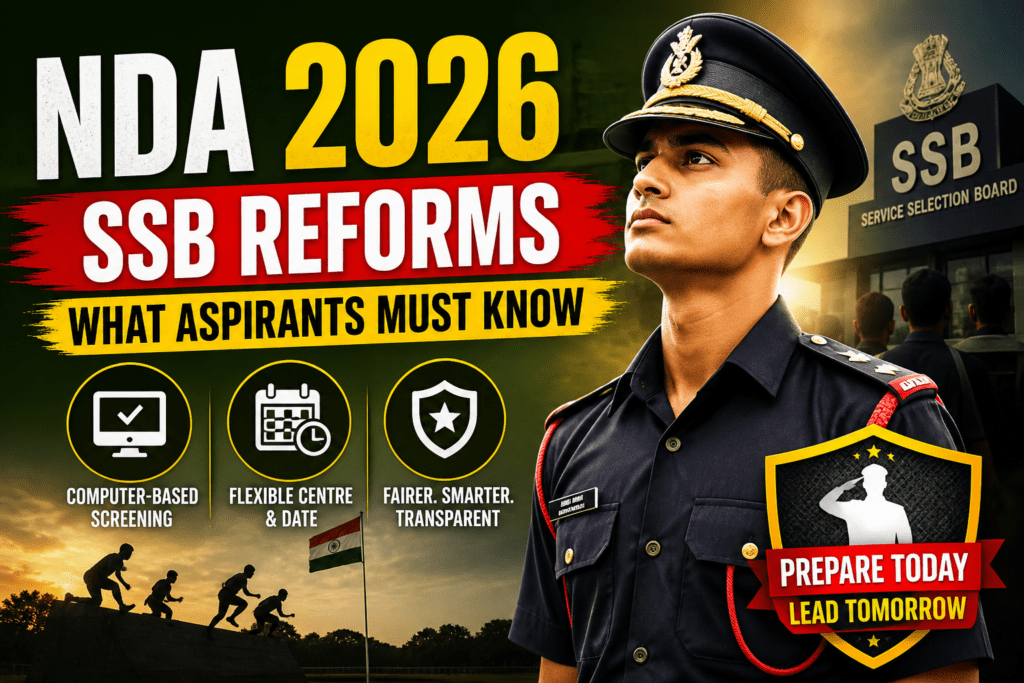
The Indian Army has recently initiated key reforms in the Service Selection Board (SSB) process to address rising concerns about high rejection rates and overcrowding at selection centres. This update is extremely important for NDA aspirants, especially those preparing through structured training programs like NDA coaching after 10th.
Why is the SSB Process Being Reviewed?
A former senior officer, Maj Gen VPS Bhakuni (Retd.), highlighted major issues affecting the fairness and perception of the officer selection process.
Key Highlights
Indian Army reviewing SSB selection process. Concern raised by Maj Gen VPS Bhakuni (Retd.)
Issues:
80% candidates getting screened out on Day 1
Overcrowding at SSB centres
Limited reporting date options
Unequal exposure for rural and semi-urban candidates
These concerns directly impact students preparing for NDA exam and SSB interview, making it crucial to understand the system deeply.
What Happens in SSB Screening (Stage I)?
The SSB screening test is conducted on Day 1 and includes:
* OIR Test (Officer Intelligence Rating)
* PPDT (Picture Perception & Discussion Test)
* Only 20–30% candidates qualify this stage.
This makes early preparation through NDA foundation courses and SSB training institutes extremely important.
Major Reforms Announced by Indian Army
The Army has proposed several changes to improve transparency, fairness and efficiency:
- Computer-Based Screening Test
* Objective evaluation
* Reduced human bias
* Better transparency
- Flexible SSB Centre & Date Selection
* Candidates can choose:
* SSB centre
* Reporting date
* Helps reduce overcrowding
- Changes in Entry Routes
* TES (Technical Entry Scheme) → May align with NDA exam
* TGC & SSC (Tech) → Through proposed CDSTE (UPSC exam)
* NCC Entry → Shortlisting based on bonus marks system
What These Changes Mean for NDA Aspirants?
These reforms highlight one clear message:
Competition is increasing and preparation must start early
Students targeting defence career after class 10th should:
* Build strong communication skills
* Improve psychological test performance
* Develop officer-like qualities (OLQs)
Joining a disciplined NDA coaching institute with hostel facility can give a major advantage.
Expert Insight for SSB Preparation
At Chandigarh Defence Academy, we have observed that:
* Most students fail due to lack of awareness, not capability
* Proper guidance can significantly improve screening success rate
Our structured program focuses on:
* SSB interview training
* Personality development
* Daily routine & discipline
* NDA written + SSB integrated preparation
Why Choose NDA Coaching in Chandigarh?
Searching for:
* Best NDA coaching after 10th
* NDA coaching with hostel
* Defence academy in Chandigarh
* Competitive environment
* Experienced mentors
* Structured training system
CDA- Thoughts about NDA preparation
Problems Identified
Many candidates screened out on Day 1
Overcrowding affects:
Quality of assessment
Fairness of selection
Rural / semi-urban candidates may face disadvantage due to lack of exposure
Reforms Introduced / Planned
Computer-Based Stage( I ) Screening
More objective & transparent
Candidates can choose SSB Centre and Reporting Date
Structural changes in entries:
TGC & SSC (Tech) → via proposed CDSTE (UPSC)
NCC Entry → shortlist using bonus marks
TES Entry → may align with NDA exam
Goals of Reforms
Reduce overcrowding
Improve transparency
Ensure fair opportunity for all backgrounds
Maintain high standards
Important Terms (Exam Focus)
* SSB – Service Selection Board
* Stage I – Screening Test (OIR + PPDT)
* TES – Technical Entry Scheme
* TGC – Technical Graduate Course
* SSC (Tech) – Short Service Commission Technical
* NCC Entry – Special entry via NCC
* UPSC – Union Public Service Commission
* CDSTE (Proposed) – Combined Defence Services Technical Exam
“Is SSB Selection Process Fir?”
The Service Selection Board (SSB) process is designed to select candidates based on Officer Like Qualities (OLQs) through psychological tests, group tasks, and personal interviews. Its multi-day assessment ensures a comprehensive evaluation, making it one of the most structured selection systems.
Why it is Fair:
* Focuses on personality and leadership, not just academics
* Uses multiple assessors and techniques
* Reduces bias through continuous observation over 5 days
Concerns:
* High screening rejection rate (Stage I)
* Candidates from rural backgrounds may lack exposure
* Overcrowding can affect assessment quality
The SSB process is fundamentally fair, but it requires continuous improvement in transparency, accessibility and awareness to ensure equal opportunity for all candidates.
CDA- Thoughts
* High rejection vs maintaining standards
* Technology vs human judgment
* Rural vs urban exposure gap
* Need for balance: Quality + Fairness
Opinion (Balanced – Recommended in SSB)
* Screening must remain strict
* But system should be:
* Transparent
* Inclusive
* Efficient
* Reforms are a positive step forward
Final Thoughts
The Indian Army’s reforms aim to make the SSB process more fair, transparent, and efficient. However, one thing remains unchanged:
Only well-prepared and disciplined candidates will succeed.
If you are serious about joining the Indian Armed Forces, start early, train smart, and choose the right mentorship.